
October 6th 2026
It is much less scary than employers sometimes think
There was no vacancy. Nevertheless, Soltegro hired Odai. Not because he fit an existing job profile exactly, but because his knowledge, experience, and ambitions aligned with what the company needed. “We really created a role for him,” says Roel Favier.
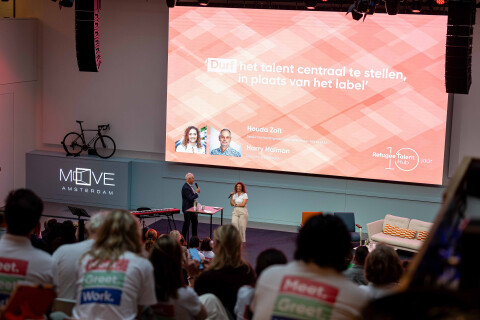
During a presentation by Refugee Talent Hub, Roel Favier was introduced to the profile of an electrical engineer. Not long after, Roel met him: Odai Albajjary.
Soltegro did not have a specific vacancy at that moment, but Roel had been harboring the desire to hire a draftsman for some time. The profile piqued his curiosity. Odai is originally from Syria and has been living in the Netherlands for several years now. With his electrical engineering background and his ambition to develop further towards engineering, Roel immediately saw opportunities.
The introduction to Odai stemmed from the collaboration between TBI and Refugee Talent Hub. Through this collaboration, Refugee Talent Hub connects people with a refugee background with TBI companies, including Soltegro.
What can we do with this talent?
For Roel, the conversation with Odai was basically the same as with any other candidate: Roel looked at the person and how they would fit into the team, while his colleague looked at the technical knowledge. But then he also looked at another question: what can we do with this talent?
That resulted in a different route than a standard job profile.
At Soltegro, drafting and engineering are relatively closely related. As a result, Odai, in his role as a drafter, can develop more quickly towards work that aligns with his education and ambitions. According to Roel, there is an important lesson in this for other employers: do not just look at whether someone currently meets all the requirements of a vacancy, but above all look at what someone already brings to the table and where you can grow together.
Trust is more than hiring someone
According to Roel, employers must also be careful not to unknowingly treat someone with a refugee background differently. That starts with trust. Why would you apply different conditions to one candidate than to another? “Whether Jan from the Netherlands applies to us or Odai from Syria: if Jan immediately gets a permanent contract with a two-month probationary period, why shouldn't Odai get that?”
The reverse is also true, by the way: if Odai is given the opportunity within Soltegro to learn new skills and grow, then that opportunity must be available to every colleague.
According to Roel, a contract is also an important signal to a new employee. “If Odai offers a permanent contract, it sends the message: 'we believe in you'. That influences how someone works, their attitude, and how quickly they become part of the organization.”
Salary is part of that too. A refugee background should not be a reason to pay someone less for the same work. “If Jan earns a certain salary in that position, then Odai should receive that same salary as well. That seems only logical to me.”
Different backgrounds
Soltegro works with colleagues from various countries. Roel notices that these different backgrounds sometimes lead to different ways of looking at work, communication, and collaboration.

We often unconsciously expect that someone thinks the same way as we do, but that is by no means a given.
That is precisely why Roel finds it valuable to open up differences for discussion. This way, you learn to understand each other better and discover where you can learn from one another as a team. Employees bring not only their professional knowledge but also their own experiences and perspectives. By being curious about these, you learn from each other's culture as colleagues. That enriches a team. At the same time, diversity is not an end in itself for him.
For me, it’s not about diversity 'for the sake of diversity'. My goal is to build a team that enjoys its work, collaborates well, and strengthens each other. Frankly, whether someone comes from Syria, Serbia, Iran, France, or the Netherlands doesn't matter that much to me. It’s about the person and the talent they bring. If that’s right, I’m eager to give that person a chance.
Energy transition
For Soltegro, the arrival of Odai was, moreover, part of a broader challenge. The energy transition is creating a lot of work in the technical sector , while skilled technical people are scarce. Soltegro wants to grow in the coming years and needs people at various levels to do so.
Another reason why Roel doesn't just want to look for people who are fully deployable today. He also wants to give people—like Odai—the chance to develop further within the company. “I see tremendous potential in Odai. In the coming months, we are going to help him further develop his talent.”
His advice to other employers?
After everything Roel has said, he keeps coming back to the same message. “Let go of nationality and look at the person and their talent. That is ultimately much more valuable. And believe me, your company will benefit from it.”
Do you want to read more?
- Discover talents through skills-based hiring
- Checklist on recruiting newcomers
- 5 tips from employers for new talent