October 21st 2026
The Craftsmen: four lessons for learning on the job
How do you find people for positions that have long been experiencing staff shortages? And how do you give people who do not naturally find their place in the labor market a chance to showcase their talent? De Vakmakers, a project by Scalabor, brings these two questions together.
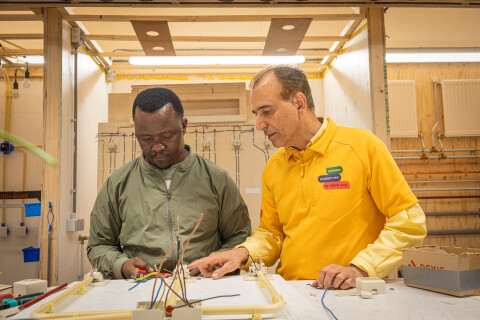
De Vakmakers is a project of social development company Scalabor. It helps people seeking work find opportunities in the construction and technical sectors. Participants include school leavers, newcomers, young people from special education, and career changers. In a twelve-week practical program, participants learn a trade in one of four areas: assistant electrician, assistant plumber, assistant carpenter, or household appliance technician.
'Learning by doing' is central to the process. Trade association Cedris recently wrote about this approach. Based on that, we have listed four lessons for employers.
Look at skills, not just diplomas and work experience.
A CV does not always show what someone is capable of in practice. Therefore, also look at concrete skills, work attitude, and what someone has already learned in practice. A practical training certificate, skills passport, or probationary period can help to get a better picture of this. This makes it clearer where someone can contribute immediately and where there is still room for development.
2. Look at the function again
Which tasks actually need to be performed? Not every employee needs to be able to perform every aspect of a job. By breaking down a job into tasks and determining which of them match an individual's skills, new opportunities can arise. This sometimes requires a different organization of work, but it can actually help to better utilize talent.
3. Create space to learn in the workplace
Not everyone learns best in a classroom. An internship, work placement, or good onboarding period gives people the chance to develop and demonstrate skills in practice. Employers can play a significant role in this by providing clear explanations, offering space to practice, and making development part of daily work.
4. Ensure appropriate guidance
A dedicated mentor on or around the workplace supports employees in the transition to work and in their further development. The mentor answers questions, discusses expectations, and checks in regularly regarding what is going well and what is still needed. Good guidance contributes to the employee's development and provides the employer with insight into what is required to enable someone to work sustainably.
De Vakmakers demonstrates that practical learning makes talent visible and helps employers look at roles and skills differently. This creates new opportunities for both people and organizations. Which activities within your organization offer room to let talent grow in practice?
Would you like to exchange ideas with us about this without obligation? Please contact us.
Read also:
- Selection checklist : what to consider?
- A good work-study program is a solution for almost everything.
- SER advice : work must become the leading factor